What does a Marine Technical Authority Actually Do on an FPSO?
 08/10/2026
 Read time: 8 minutes
 Category: Blog
 Author:
 With approximately 16 years of offshore experience followed by four years in the consultancy side of the marine and offshore industry, one recurring observation is how different a marine operation can appear on paper compared with how it functions in practice offshore.
A vessel may technically have the required crane capacity. A DP notation may appear to satisfy the requirement. A procedure may seem entirely acceptable during a desktop review.
However, once vessel movements, weather, personnel, simultaneous operations (SIMOPS), equipment condition, FPSO heading, production requirements and contingency scenarios are considered, the operational picture can change very quickly.
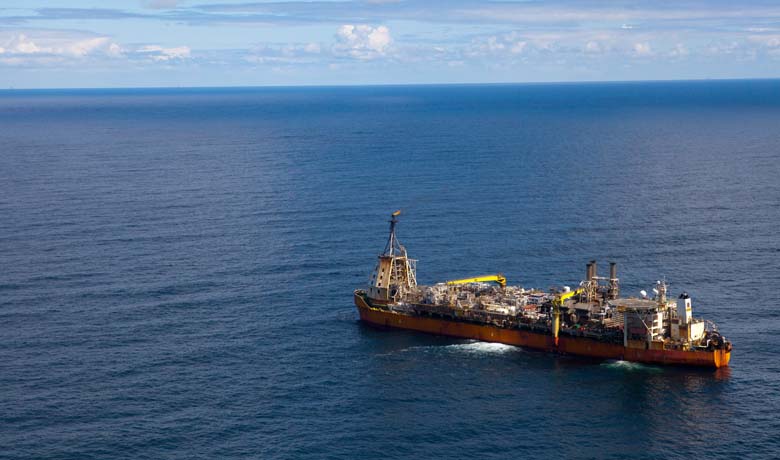
The reality forms a significant part of the Marine Technical Authority (MTA) role of Ben Sturrock supporting Dana Petroleum’s Triton FPSO in the North Sea.
There Really Isn’t a Normal Day
The MTA role is deliberately broad.
Some weeks may be focused on the maintenance strategy for marine systems onboard the FPSO and assessing whether planned maintenance activities adequately demonstrate that equipment will continue to perform its intended function.
This often requires looking beyond whether a maintenance task simply exists within the Planned Maintenance System (PMS).
Questions typically include:
- What is the maintenance basis?
- Is it aligned with OEM guidance?
- Does it adequately support the required performance standard?
- Is the frequency appropriate?
- Is the evidence being captured sufficient to demonstrate continuing integrity?
Other weeks may involve reviewing a proposed marine operation involving vessels operating in close proximity to the FPSO.
Then an entirely different challenge may arise.
That variety is one of the characteristics that makes the role both challenging and valuable.
One example: The Triton aft reel project
One of the more significant projects requiring extensive marine technical involvement has been the proposed replacement of the aft offloading reel on Triton.
At first glance, the scope appears relatively straightforward.
Remove the reel and install the replacement.
The reality, however, is considerably more complex.
It is not simply a case of selecting a vessel with a crane whose headline capacity exceeds the weight of the lift.
The marine study has required a detailed assessment of the complete operation.
That includes considerations such as:
- crane capacity at the actual required outreach, rather than simply the maximum crane SWL;
- vessel geometry and the position the vessel would need to maintain relative to Triton;
- DP capability, redundancy and credible failure cases;
- FPSO heading-control requirements during the operation;
- interaction between the construction vessel, supporting vessels and the FPSO;
- lift height and rigging arrangement;
- vessel motions and weather limitations;
- deck space, transportation and securing arrangements;
- the practical offshore sequence for removal and installation;
- contingency arrangements;
- Marine Warranty Survey requirements;
- and ultimately whether the proposed solution is practical for the people who will actually have to execute it offshore.
A range of vessel concepts was assessed rather than immediately selecting the largest crane vessel available.
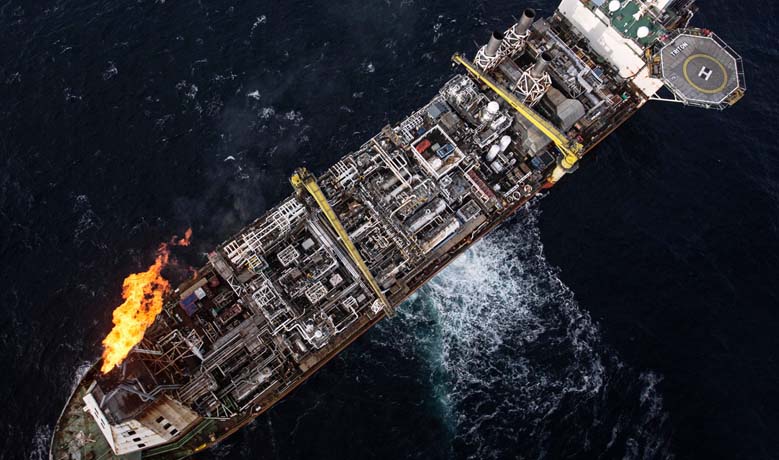
Smaller construction vessels can appear commercially attractive, but crane capacity often reduces significantly with outreach, and the vessel may need to operate much closer to the FPSO.
At the other end of the spectrum, a large heavy-lift vessel may provide substantial lifting capability and greater weather resilience but introduce an entirely different level of cost and mobilization complexity.
The purpose of a marine technical study is therefore not simply to identify a vessel capable of lifting the equipment.
Its purpose is to identify the marine spread and operating philosophy that provides an acceptable balance between the technical feasibility, safety, operability, schedule and cost.
This is where the MTA role can add significant value.
The Vessel Specification Only Tells Part of the Story
Extensive offshore experience highlights the distinction between theoretical vessel capability and practical operational suitability.
A vessel specification describes what a vessel is technically capable of doing.
Marine assurance is about determining whether it is sensible to undertake that activity in a particular location, alongside a particular asset and under specific operating conditions.
Those are not always the same thing.
For example, there is little value in selecting a vessel with substantially more capability than required if another solution can achieve the same objective within an acceptable risk profile.
Conversely, selecting a vessel solely because it has the lowest day rate can quickly become a false economy if the operational weather envelope is so restricted that the project loses multiple days waiting on weather or requires additional support vessels to compensate.
The optimum solution usually sits somewhere between engineering requirements, marine operational realities and commercial considerations.
Looking Ahead
Given the size of the blades in question, it is very common that the vessel’s SOLAS required line of sight is compromised. The load plan must be reviewed upon receipt to check if this is the case, if it is then flag state approval should be sough prior to loading.
Where the Marine Technical Authority Fits
A significant part of the MTA role involves operating at the interface between operations, engineering, projects, HSE, contractors and management teams.
Typical areas of involvement include:
- FPSO marine systems and asset integrity
- Marine maintenance strategy and PMS assurance
- Mooring, station keeping and heading control
- Vessel suitability and marine assurance
- Offshore lifting and construction-vessel operations
- SIMOPS and close-proximity vessel activity
- Technical modifications and management of change
- HAZIDs and marine risk assessments
- Metocean and environmental operating limits
- Emergency and contingency planning
- Class, verification and regulatory interfaces
- Marine contractor and vessel technical reviews
- Marine procedures and operational readiness
- Technical studies supporting project and management decisions
A key strength of the role is that it focuses on practical assurance rather than assurance for the sake of producing another report.
The objective is always to arrive at solutions that are workable offshore.
Why the Role Matters on an FPSO
The marine systems onboard an FPSO spend much of their operational life quietly performing the functions for which they were designed.
As a result, they can sometimes receive less attention than the production plant until a major project, abnormal condition or integrity concern brings the marine side of the asset into focus.
However, the consequences of getting a marine operation wrong can be significant.
Loss of position, failure of a mooring component, a poorly controlled vessel approach, failure of safety-critical marine equipment, or an inadequately planned heavy lift can quickly become much more than a marine issue.
Having a Marine Technical Authority provides operators with a resource that considers the complete marine picture rather than focusing solely on a single project or discipline.
The role also provides independent technical challenge.
Sometimes that challenge confirms that a proposed operation is entirely acceptable.
Sometimes additional controls are required.
Sometimes the methodology needs to be modified.
And occasionally the correct conclusion is simply that there is a better way to achieve the objective.
Ultimately, marine technical assurance must remain grounded in operational reality.
Calculations, studies and procedures are essential, but their value is determined by whether they can be safely and effectively executed offshore.
“If the solution doesn’t work for the people actually carrying it out, then it probably wasn’t the right solution in the first place.”
That principle sits at the heart of effective marine technical assurance on FPSOs and other offshore assets.
In the end, good marine technical assurance is not simply about compliance, verification or documentation. It is about ensuring that engineering intent, operational practicality, safety and commercial objectives are aligned to deliver solutions that work in the real offshore environment.